logo
Shenzhen First Tech Co., Ltd.
About Us

Shenzhen First Tech Co., Ltd.

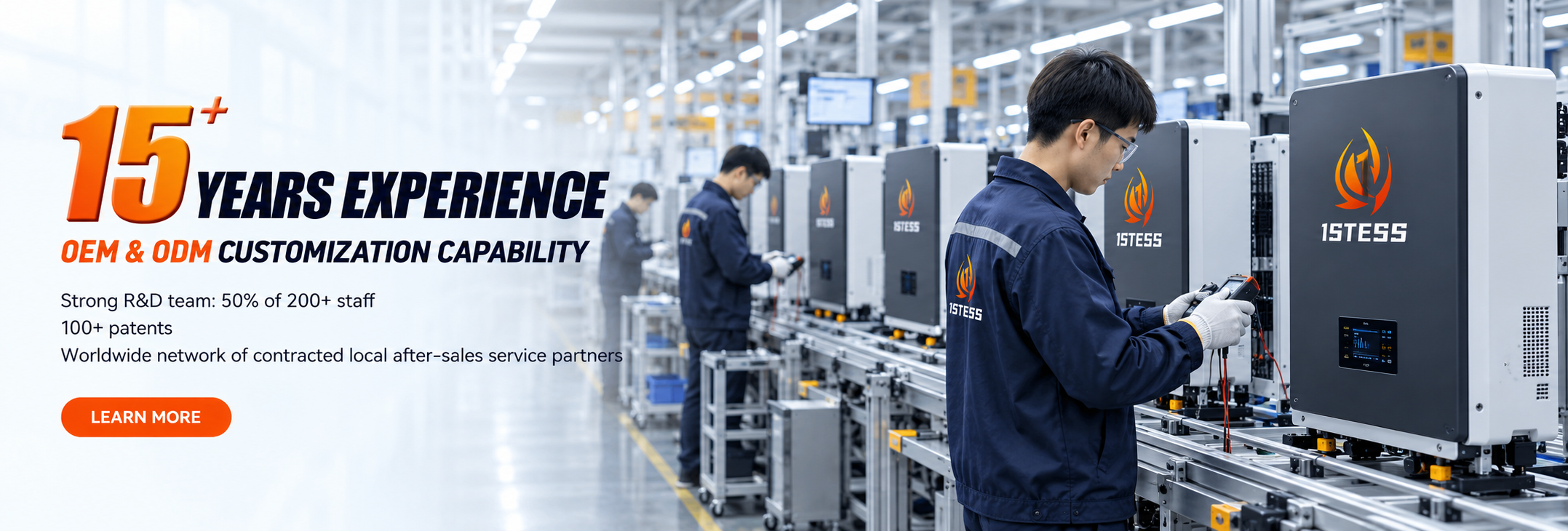
Shenzhen First Tech Co., Ltd was established in 2017, which is a one-stop solution provider of solar & battery energy storage system.First Tech is engaged in the research, development, production, sales and service of the commercial and industrial energy storage system, home energy storage system, lithium-ion battery pack, solar hybrid inverter solar optimizer etc.First Tech is located in Shenzhen City, Guangdong Province, China, the factory have passed lS09001,1S014001,1S045001 management ...
View More

2017

Year Established

16000000 +

Annual Sales

150 +

Employees

News
Blackout Anxiety Meets Bill Shock: Korean Households Turn to Solar as Summer Heat Wave Threatens Record Power Crunch
2026-07-06
SEOUL, South Korea — July 6, 2026 The mercury is rising, and so is the anxiety. Across South Korea, families are bracing for a summer that forecasters warn could bring the highest electricity demand in the nation's history — and with it, the twin terrors of sky-high bills and sudden blackouts. A Summer of Record-Breaking Demand The numbers are stark. The Ministry of Climate, Energy and Environment projects that peak electricity demand this summer could reach 98.8 gigawatts (GW) during the third week of August, surpassing the previous record of 97 GW set in 2024. Prolonged heatwaves combined with cloudy weather — which reduces solar power generation — are expected to drive air-conditioning use to unprecedented levels. While the government has secured 107 GW of supply capacity, leaving a reserve margin of 8.2 GW, officials acknowledge that the strain on the grid will be immense. An additional 8.8 GW of reserve resources have been prepared to handle emergencies such as heavy rain, typhoons, or extreme heat. The government has designated June 29 through September 18 as the official power supply and demand response period, maintaining an emergency readiness posture. Bills That Bite For Korean households, the summer power crunch comes with a painful price tag. To ease the burden, the government has temporarily relaxed progressive tariff brackets for July and August. The first tier expands from 0-200 kWh to 0-300 kWh, and the second tier from 200-400 kWh to 300-450 kWh. The current rate structure applies 120 won per kWh up to 300 kWh, 214.6 won per kWh between 300-450 kWh, and 307.3 won per kWh above 450 kWh, with base charges rising sharply as consumption crosses each threshold. Even with these temporary adjustments, a household's summer electricity bill depends heavily on whether consumption crosses the 300 kWh or 450 kWh thresholds. For vulnerable households, the government has raised the monthly discount ceiling to a maximum of 20,000 won ($13), and electricity supply will continue even if bills remain unpaid from July through September. When the Lights Go Out But the monthly bill is only half the story. Across the country, households are confronting the reality of unexpected blackouts — often with devastating consequences. In May, a fire in an apartment complex in Sejong City caused a complete blackout affecting more than 1,400 households. The sudden outage halted refrigerators, freezers, elevators, and water supply systems, with officials warning that full restoration could take two to three weeks. Just weeks later, a power outage struck 1,900 households in Incheon's Songdo-dong, Dongchun-dong, and Yeonsu-dong areas at midnight. In Daegu, water overflow from an apartment storage tank flooded an electrical room, disrupting power and water to 1,376 homes. In January, during a severe cold wave, a blackout affecting two apartment buildings in Seoul's Guro District lasted 19 hours, leaving 939 households without heating in freezing temperatures. A powerful typhoon in May disrupted power to 57,000 households across the country. The government has since vowed to restore power within 24 hours if blackouts occur due to apartment facility issues. But for families living through these outages, every hour without power is a reminder of how fragile the grid can be. A National Push for Solar Recognizing the urgency, the Korean government is accelerating its renewable energy agenda. The Ministry of Climate, Energy and Environment has set a goal of deploying 100 GW of renewable energy by 2030. The plan includes expanding rooftop PV installations on traditional markets, schools, parking lots, and factory roofs. The government aims to establish more than 700 "Sunlight Income Villages" this year — resident-led energy self-governance projects where local communities form cooperatives to pursue solar power generation and return profits to residents. All available measures are being mobilized, including industrial complex rooftop installations, agrivoltaics, floating solar, and the "Renewable Energy 100% (RE100)" initiative for public institutions. New factories will be mandated to install solar panels on their rooftops as part of a broader strategy to fast-track Korea's transition to renewable energy. The rooftop subsidy cap has been raised from 100 kW to 200 kW, and local governments are offering significant support. In Paju, Gyeonggi Province, households can receive an 80% subsidy for 3kW solar installations, with the owner paying just 909,000 won out of pocket. Yeongju City in North Gyeongsang Province offers up to 80% subsidy support for solar installations. A Solution Built for Korean Homes Enter the M6200-48L — a new generation of off-grid solar inverter designed for the unique challenges of the Korean energy landscape. With a pure sine wave output and power factor of 1.0, the system delivers high-quality electricity that protects sensitive electronics — from computers to modern appliances. The inverter features a built-in MPPT solar charge controller capable of handling up to 120A of solar charging current. The PV input accepts up to 500V DC, with an MPPT voltage range of 60V to 450V DC, maximizing energy harvest from solar panels even under cloudy conditions. The maximum PV array power reaches 6,500W, making it suitable for households of all sizes. The M6200-48L supports parallel operation with up to 12 units in single-phase or three-phase configurations — meaning the system can grow as your energy needs expand. This modular approach gives families the flexibility to start small and scale up over time. Freedom from the Grid The transfer time is just 10 milliseconds for personal computers and 20 milliseconds for home appliances — fast enough that most users won't even notice when the grid fails. With a surge power rating of 12,400 VA, the inverter can handle the startup loads of air conditioners, refrigerators, and water pumps without breaking a sweat. The system supports multiple output priorities — UTL, SOL, SBU, and SUB — giving users the flexibility to choose their preferred power source. Lithium battery activation can be performed by PV or utility, and the inverter communicates with LiFePO4 batteries via RS485 for optimized performance and extended battery life. The EQ function further enhances battery performance and extends lifecycle. Perhaps most importantly, this inverter can operate without batteries, providing immediate solar power during daylight hours — a critical feature for families who need relief from high electricity bills today, not months from now. Energy Independence Within Reach For Korean families, the choice is becoming clear. With electricity bills rising, blackouts becoming more frequent, and government policies increasingly supportive of self-generated solar power, the question is no longer if households should go solar, but when. The M6200-48L off-grid solar inverter offers a practical, affordable path to energy independence. It puts the power back in the hands of the people — where it belongs.
Read More
Latest company news about Blackout Anxiety Meets Bill Shock: Korean Households Turn to Solar as Summer Heat Wave Threatens Record Power Crunch
New Hybrid Inverters Let Families Cut Bills, Sell Power Back — and Never Fear Blackouts Again
2026-07-06
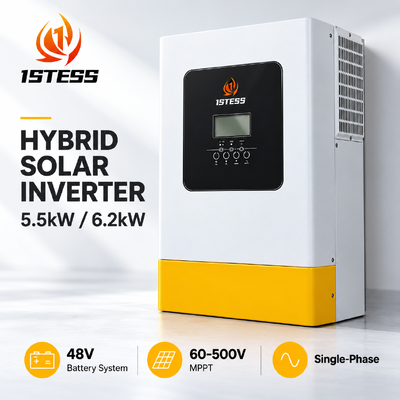
BANGKOK, Thailand — July 6, 2026 The numbers are staggering. A container truck snags a power line in Samut Prakan, and 70 utility poles collapse like dominoes — plunging entire communities into darkness. A summer storm tears through eastern Bangkok, toppling 89 power poles, crushing over 30 vehicles, and leaving wide swaths of the capital without electricity or internet. Another thunderstorm in Lat Krabang knocks down 40 more poles, paralyzing traffic and forcing residents to navigate darkened streets. For millions of Thai families, these scenes are all too familiar. And now, with electricity tariffs climbing and global energy prices in turmoil, the cost of staying connected has never been higher — or the case for going solar more compelling. Bills That Keep Rising Thailand's electricity tariff for the May-August 2026 billing cycle was set at 3.95 baht per unit, up from 3.88 baht in the previous period. The increase reflects soaring liquefied natural gas costs — gas accounts for roughly 60 percent of Thailand's power generation — and a 50.94 satang per unit surcharge to repay the Electricity Generating Authority of Thailand's accumulated cost burden of 35.9 billion baht. An 18 percent hike from the previous rate. While the government has capped the first 200 units at 3 baht per unit for the June 2026 billing cycle, households consuming more than 400 units face rates as high as 5.00 baht per unit under proposed progressive tariff structures. Large families and small businesses operating from residential properties are bracing for even higher bills from July. The Energy Regulatory Commission is also studying new measures beyond July 2026 to continue easing the burden on low-income households. "The current energy crisis, triggered by the Iran war, prompted the government to ensure electricity costs for small households remain capped," the ERC noted. But for families with higher consumption, the message is clear: reduce usage, or pay the price. A Nation Under Pressure — Literally Beyond the monthly bill, Thailand's power infrastructure is under siege. In Surin and Buriram, summer storms toppled power poles and billboards, triggering widespread blackouts and road closures. In Nakhon Si Thammarat and Surat Thani, Storm Pabuk cut power across entire provinces as electricity poles fell and lines were severed by falling trees. The list goes on. For households in Bangkok's Lat Krabang district, the June 26 storm was a harsh reminder of how fragile the grid can be. "A thunderstorm with strong winds knocked down approximately 40 power poles, causing widespread power outages and internet disruptions," local officials reported. Authorities had to close roads and deploy emergency crews to work through the night. A Government That Wants You to Go Solar Recognizing the urgency, Thailand's National Energy Policy Council, chaired by Prime Minister Anutin Charnvirakul, approved a sweeping package of electricity tariff reforms and solar incentives on April 29, 2026. The centerpiece is the "Solar Rooftop for the Public" scheme under a Net Billing model. Under the program, households can sell surplus electricity to the national grid at 2.20 baht per unit for 10 years. The government has set a purchase target of 500 MW — far exceeding the 90 MW cap in a similar scheme launched in 2013. Applications opened in early July. The incentives don't stop there. Royal Decree No. 805 B.E. 2569 (2026) allows individuals to claim personal income tax deductions of up to 200,000 baht for rooftop solar installations. Each taxpayer can claim relief for one meter and one system, with installations capped at 10 kWp. The tax incentive applies to installations completed between March 3, 2026, and December 31, 2028. The government is also rolling out 30-40 billion baht in low-interest loans for households installing 5-10 kW rooftop systems, with flexible down-payment and installment options. "The Finance Ministry is working to provide installment-based financing, allowing households to install rooftop systems at costs lower than their electricity bills," Energy Minister Akanat Promphan said. A Solution Built for Thailand's Realities Enter the GM Series 5.5/6.2KW — a new generation of on/off-grid hybrid inverters designed for the unique challenges of Thailand's energy landscape. With the ability to operate in grid-tie, off-grid, and grid-tie with backup modes, these inverters give families the flexibility to choose how they use power — and when they sell it back. The GM Series features a high PV input voltage range of up to 500V DC and an MPPT voltage range of 60V to 500V DC, maximizing energy harvest from solar panels even under Thailand's unpredictable weather. The built-in MPPT solar controller delivers up to 100A (5.5KW model) or 120A (6.2KW model) of solar charging current. But what truly sets the GM Series apart is its parallel operation capability — up to 12 units can be connected in single-phase or three-phase configurations. For households looking to scale up, or for small businesses needing reliable backup, this modular approach means the system grows with your needs. The inverter supports programmable supply priorities — SBU, SUB, SUF, and ZEC — giving users complete control over whether to draw from solar, battery, or the grid. The EQ function optimizes battery performance and extends lifecycle, while the detachable dust cover protects against Thailand's dusty and humid conditions. Turn Your Roof into a Power Plant Perhaps the most powerful feature is backflow prevention via an external CT sensor and grid connection function. This allows households to feed excess solar power back to the grid — and get paid for it. With the government's buyback rate of 2.20 baht per unit and a 10-year guarantee, the GM Series transforms residential rooftops into small-scale power generators. "More than 90 percent of households, around 21 million, are expected to benefit" from the new tariff and solar policies, Energy Minister Akanat Promphan confirmed. The government aims to maximize adoption by effectively turning residential rooftops into small-scale power generators. With installation procedures streamlined — self-use systems must be completed within seven days, and grid-sale systems within 30 days — there has never been a better time for Thai families to make the switch. A Future Powered by the Sun Thailand's solar energy market is expected to grow from 5.20 GW in 2025 to 5.55 GW in 2026, reaching 7.71 GW by 2031. The country's draft 2026 Power Development Plan calls for renewable energy to account for more than half of total generation capacity, with a long-term target of 51 percent renewables by 2037. By 2050, 70 percent of Thailand's power is expected to come from clean energy, with 60 percent from renewables. For Thai families, the message is unmistakable: energy independence is no longer a dream — it's a practical, affordable reality. With electricity bills rising, blackouts becoming more frequent, and government incentives at an all-time high, the question is no longer if households should go solar, but how soon. The GM Series 5.5/6.2KW hybrid inverter puts that answer within reach.
Read More
Latest company news about New Hybrid Inverters Let Families Cut Bills, Sell Power Back — and Never Fear Blackouts Again
Vietnam’s Solar Revolution: New Off-Grid Inverters Put Power Bills and Blackouts in the Past
2026-07-06
HO CHI MINH CITY, Vietnam — July 6, 2026 As scorching heatwaves drive electricity demand to record levels and household bills climb ever higher, a quiet revolution is taking place across Vietnam's rooftops. Millions of families are turning to the sun — not just to save money, but to take back control of their energy future. Bills That Bite The numbers tell a sobering story. Vietnam's residential electricity tariff is divided into six progressive tiers, with the highest rate reaching 3,460 VND per kilowatt-hour . A household consuming 400 kWh in a single month — not uncommon during the sweltering summer — now faces a bill of over 1.16 million VND before taxes . And the pain doesn't stop there. Electricity prices have been increased four times since early 2023 — 3 percent, 4.5 percent, and two consecutive 4.8 percent hikes . With the tariff adjustment interval now reduced from six to three months, further increases loom on the horizon . For many Vietnamese families, these rising costs are more than an inconvenience. They are a financial burden that cuts into food, education, and savings. When the Lights Go Out But the monthly bill is only half the story. Across the country, households are bracing for something even more disruptive: power outages. In May and June, Hanoi and other northern localities suffered frequent load shedding due to low rainfall, which reduced capacity at hydropower plants . While officials have assured there will be no widespread power shortages for the remainder of 2026, the national grid is expected to operate under intense pressure as surging industrial and cooling demands outpace the addition of new power generation capacity . On May 15, nationwide power demand hit a record 54,654 MW — up 8.6 percent from a year earlier . The northern region alone recorded peak consumption of 20,482 MW on May 27, an increase of approximately 13.3 percent compared to the same period last year . The evening peak hours — from 8 to 11 PM — place the greatest strain on the system, precisely when solar power generation is unavailable after sunset . It is during these critical hours that families are most vulnerable to blackouts. A Government Call to Action Recognizing the urgency, Prime Minister Phạm Minh Chính has issued a directive calling for stricter electricity-saving measures and accelerated development of rooftop solar power . The target is to save at least 3 percent of total national electricity consumption in 2026, and to achieve a minimum 10 percent reduction in electricity use during peak hot months . The government aims to have approximately 10 percent of households nationwide install and use rooftop solar power annually . With approximately 28.6 million households in Vietnam, this target could bring solar power to nearly 2.8 million rooftops . A World Bank survey indicates that Ho Chi Minh City and Da Nang are two cities with great potential for developing rooftop solar power . A Solution Built for Vietnam's Conditions Enter the EM8500-48L and EM11000-48L — a new generation of off-grid solar inverters designed to meet the unique challenges of Vietnam's energy landscape. With pure sine wave output and a power factor of 1.0, these systems deliver reliable, high-quality electricity that protects sensitive electronics — from computers to modern appliances. The inverters feature built-in dual MPPT solar charge controllers, capable of handling up to 140A (EM8500-48L) or 160A (EM11000-48L) of solar charging current. The PV input accepts up to 500V DC, with an MPPT voltage range of 60V to 500V DC, maximizing energy harvest from solar panels even under less-than-ideal weather conditions. The maximum PV array power reaches 10,000W for the EM8500-48L and 11,000W for the EM11000-48L, making them suitable for households of all sizes. Freedom from the Grid The transfer time is just 10 milliseconds for personal computers and 20 milliseconds for home appliances — fast enough that most users won't even notice when the grid fails. With surge power ratings of 17,000 VA and 22,000 VA respectively, these inverters can handle the startup loads of air conditioners, refrigerators, and water pumps without breaking a sweat. The systems support multiple output priorities — UTL, SOL, SBU, and SUB — giving users the flexibility to choose their preferred power source. Lithium battery activation can be performed by PV or utility, and the inverters communicate with LiFePO4 batteries via RS485 for optimized performance and extended battery life. The EQ function further enhances battery performance and extends lifecycle. Perhaps most importantly, these inverters can operate without batteries, providing immediate solar power during daylight hours — a critical feature for families who need relief from high electricity bills today, not months from now. A Growing Movement The shift to solar is already gaining momentum. EVNNPC has assigned a plan for the development of self-produced, self-consumed rooftop solar power with a total capacity of 680 MW across 10,188 customers . The government has also issued Decree 243/2026/ND-CP, which took effect on June 26, 2026, allowing households to sell surplus electricity from their rooftop solar systems . Surplus electricity can now be bought and sold through agreements between parties, though not exceeding 50 percent of the output from the power source . The Vietnam Solar Energy Market, valued at 19.5 GW in 2025, is estimated to grow to 37.63 GW by 2031 — a compound annual growth rate of 11.58 percent . As the country pushes toward its Net Zero 2050 target, rooftop solar is emerging as a cornerstone of Vietnam's energy transition. Energy Independence Within Reach For Vietnamese families, the choice is becoming clear. With electricity prices rising, blackouts looming, and government policies increasingly supportive of self-generated solar power, the question is no longer if households should go solar, but when. The EM8500-48L and EM11000-48L off-grid solar inverters offer a practical, affordable path to energy independence. They put the power back in the hands of the people — where it belongs.
Read More
Latest company news about Vietnam’s Solar Revolution: New Off-Grid Inverters Put Power Bills and Blackouts in the Past
Filipino Homes Turn to Smart Solar as Power Bills Soar and Brownouts Bite
2026-07-06
MANILA, Philippines — July 6, 2026 Across the Philippines, families are grappling with a double blow: sky-high electricity bills and the all-too-familiar dread of a sudden blackout. As summer heat drives demand to record levels and global fuel costs remain volatile, more Filipino households are taking control of their energy future — and a new generation of off-grid solar technology is making that leap more practical and affordable than ever before. A Nation Under Pressure The numbers paint a stark picture. In June alone, Manila Electric Company (Meralco) raised its residential rate to PHP 14.4833 per kilowatt-hour, pushing a typical 200-kWh household bill up by another PHP 30. The generation charge — the largest component of the bill — jumped to PHP 9.0704 per kWh, driven by tight supply conditions that forced the Luzon grid into Red Alert status for three consecutive days in May. The pain is even sharper in the Wholesale Electricity Spot Market, where prices surged by 38.5 percent in May to PHP 7.79 per kWh from PHP 5.63 the previous month. And for families already struggling to make ends meet, energy costs are taking an outsized toll: low-income households now spend about 16 percent of their budgets on power bills, according to the International Energy Agency. "The Philippines has strong solar energy potential because of its long sunshine hours throughout the year," noted an industry observer at a recent energy exhibition in Manila. "As electricity prices continue to rise, more local customers are looking for reliable and affordable solar energy systems." When the Lights Go Out Beyond the monthly bill, Filipinos face a more immediate threat: power outages that can strike without warning. A recent study by market research firm Agile Data Solutions found that 18 percent of Filipinos say they always experience blackouts, while another 49 percent encounter them occasionally. The Luzon and Visayas grids were placed under red alert this year due to sustained high demand and the shutdown of major coal-fired facilities. For island communities and remote barangays, the situation is even more dire. In Palawan, a massive PHP 800-million microgrid project is underway to bring 24/7 electricity to over 30,000 residents across 14 underserved communities. In Quezon province, the Department of Energy is rolling out a PHP 52-million hybrid microgrid to power an island barangay. And in Nueva Vizcaya, the provincial government has allocated PHP 16 million this year alone to provide solar kits to 3,600 more upland households. But for the millions of Filipino families who cannot wait for government infrastructure to arrive, the answer is already on their rooftops. A Solution Built for the Philippines Enter the EM6200T-48L — a 6.2 kW off-grid solar inverter designed specifically for the unique challenges of the Philippine energy landscape. With a 94 percent peak efficiency and a 120A maximum solar charge current, the system harnesses the country's abundant sunshine to power homes through the longest summer days and the darkest stormy nights. The device's dual output capability ensures that critical appliances stay running even during severe weather. Its pure sine wave output keeps sensitive electronics safe, while the 10-20 millisecond transfer time means that when the grid fails, the lights stay on — seamlessly. With a surge capacity of 12,400 VA, the inverter can handle the startup load of refrigerators, air conditioners, and water pumps without breaking a sweat. "The need for reliable backup power during typhoon season cannot be overstated," observed a solar technology representative during a recent industry showcase. "Home backup systems with modular architecture and substantial expansion capacity are built to handle the frequent outages — keeping refrigerators running, connectivity intact and households protected." Freedom from the Grid The EM6200T-48L accepts a wide input voltage range of 90-280VAC, making it compatible with the unstable grid conditions common in many Philippine provinces. Its MPPT solar charger operates across a 60-500VDC range, maximizing energy harvest from solar panels regardless of weather conditions. And with lithium battery communication via RS485, the system optimizes battery performance and extends lifespan. Perhaps most importantly, the inverter offers true energy independence. Families can say goodbye to skyrocketing electricity bills and the anxiety of unexpected outages. Children can study without interruption. Small businesses can keep their doors open longer. And when typhoons strike — as they inevitably do — homes remain powered, connected, and safe. A Growing Movement The shift to solar is already underway. The same Agile Data study found that nearly 87 percent of Filipinos are considering installing solar panels, with 82.91 percent intending to adopt solar power within the next one to five years. Lowering electricity bills emerged as the main driver, cited by 33.59 percent of respondents, followed by the need for reliable power supply (16.75 percent). "The Philippines has 1.8 GW in potential rooftop solar capacity across homes, commercial buildings and public facilities," a recent Philstar analysis noted. "Even modest expansion of distributed solar could help reduce electricity costs, strengthen energy resilience and lessen the country's exposure to unpredictable global fuel markets." As National Power Corp. President Jericho Nograles put it: "When the Middle East crisis erupted, crude oil prices went up. I looked into hybridization, then I said: 'Let's roll it out as fast as we can and as meaningfully as we can.'"
Read More
Latest company news about Filipino Homes Turn to Smart Solar as Power Bills Soar and Brownouts Bite
More Products
What Did They Say
Sarah Wilson
Sarah Wilson
The energy storage solution from First Tech has been a game-changer for our business. It has provided us with reliable backup power and helped us reduce our energy costs significantly."
The energy storage solution from First Tech has been a game-changer for our business. It has provided us with reliable backup power and helped us reduce our energy costs significantly.
Samantha Patel
Samantha Patel
The First Tech energy storage system has exceeded our expectations. It's easy to use, requires minimal maintenance, and has proven to be a valuable asset in ensuring the continuity of our operations
David
David
The staff at Shenzhen First Tech Co., Ltd. is highly knowledgeable and always ready to assist with any inquiries. They took the time to understand my needs and provided tailored solutions that exceeded my expectations. Their attention to detail and commitment to quality truly set them apart from other companies in the industry
Send your inquiry
Please send us your request and we will reply to you as soon as possible.
Send